Corinne_Hoisington-March

Microsoft Teams and Engagement Tools for Online Teaching

Microsoft Teams and Engagement Tools for Online Teaching

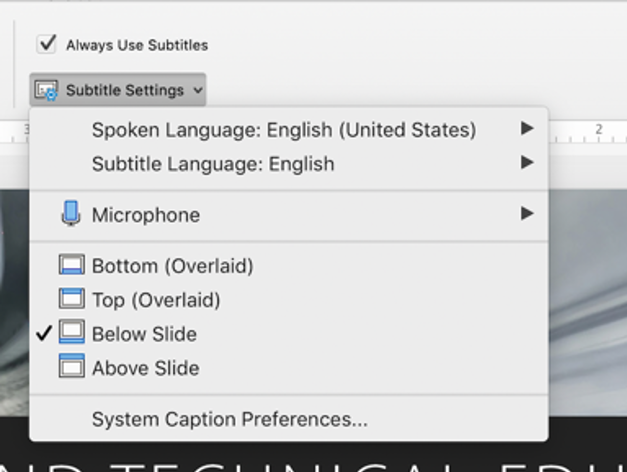
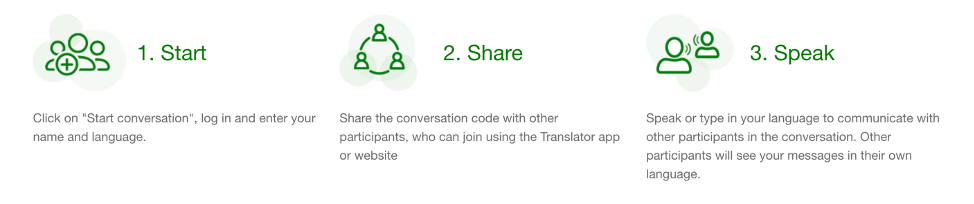
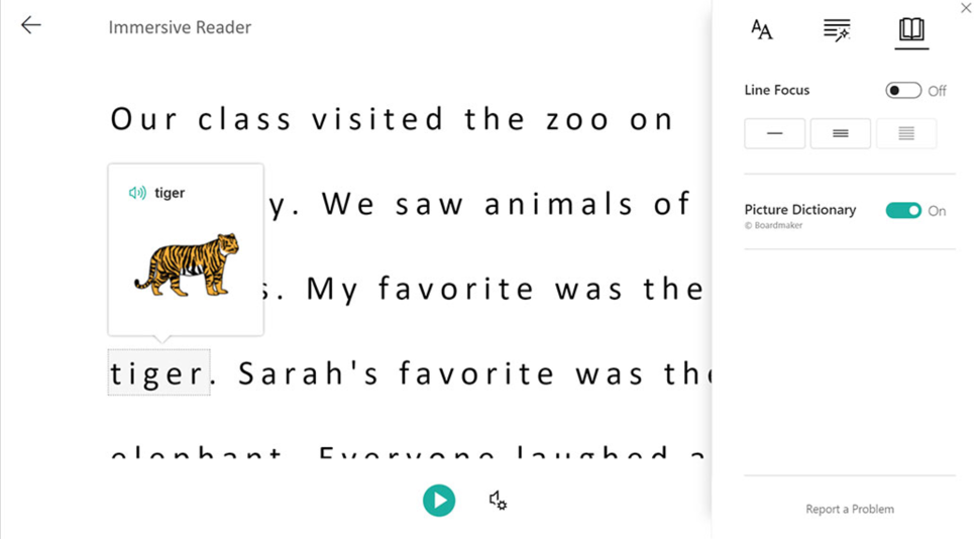
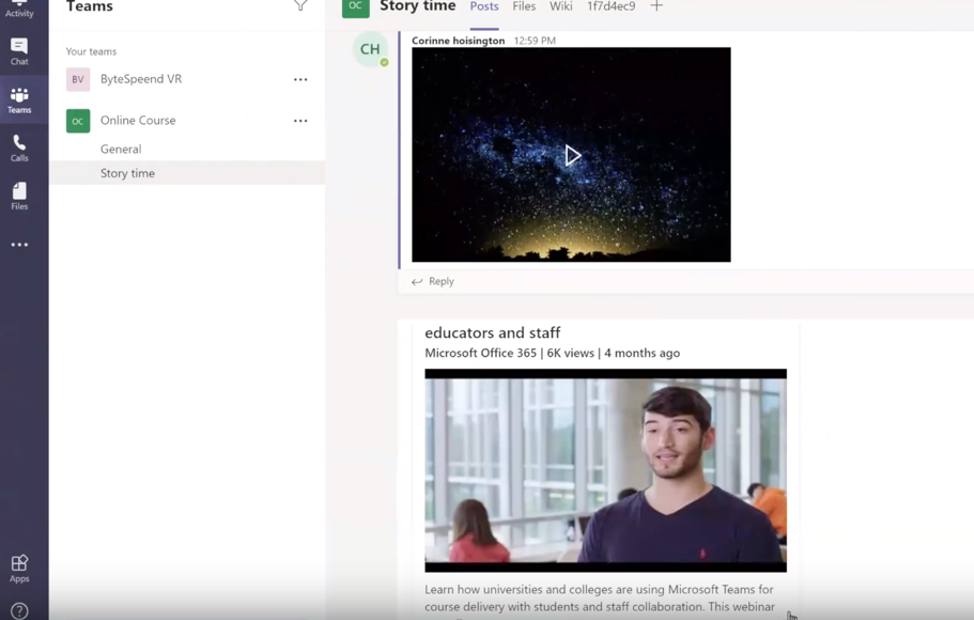
Communicating with students and parents has changed drastically as schools across the country have been forced to teach online for the first time this spring, but author Corinne Hoisington sees this as an opportunity to make use of the many free digital tools we have today to engage students in learning even when they can’t be in the classroom.

Corinne Hoisington

Professor of Information Systems Technology
Central Virginia Community College, Lynchburg, Virginia

Yes, I'm over the age of 16. I want to receive important National Geographic Learning | Cengage updates and information. *

Communicating with students and parents has changed drastically as schools across the country have been forced to teach online for the first time this spring, but author Corinne Hoisington sees this as an opportunity to make use of the many free digital tools we have today to engage students in learning even when they can’t be in the classroom.

Watch author and Computer Science Professor/Teacher Corinne Hoisington walk through some amazing tips and free online tools to start teaching online.

tom-gainor--vDWZgVsE5s-unsplash

5 CTSO Tips for Business, Marketing and Finance Advisors

5 CTSO Tips for Business, Marketing and Finance Advisors

Abigail Hess

Associate Product Marketing Manager • Career and Technical Education • National Geographic Learning | Cengage

*Learn more about DECA competitions, my experience and why business professionals should volunteer their time as CTSO judges in the first post of this series and tips for role-play student competitors in the second post of this series.

Enliven Role Play Prep — Apply the Butterfly Effect or try and SNL Production Week

The traditional role play gives students a short period of time to read a new scenario, come up with a solution, present, act-out their role and gain valuable interview skills by answering questions on the fly. A lot happens very quickly and there isn’t much time to reflect on what could have been done differently. Try mixing up role play with either of these strategies:

  • • Butterfly Effect—small changes can lead to really BIG changes down the line. Try taking some role play scenarios you’ve used in the past and ask the class to find pieces of information they could change out for something else. Did the scenario say you are to create a marketing plan for a Boutique Hotel? What if it was for an international chain instead? Was the company you were supposed to be working for a chain of discount hair salons like SuperCuts? What if it was an online startup for pet art like Crown & Paw? Work as a group to reimagine old scenarios and list out all of the decisions you may now need to rethink throughout the role play.
  • • Saturday Night Live Today—Writers and actors for SNL write multiple sketches and create an entire show each week with their infamous production schedule. Instead of using a pre-written business scenario for a role play, ask the students to write and perform their role-play for the class at the end of the week.
    • • On Monday, they will split into small groups for a pitch meeting. This will include research, discussion, and time to designate roles for the rest of the week.
    • • Tuesday is script-writing day. Lockdown the chosen scenario and describe the perfect cast to solve the problem. Ask them to add in some twists and turns—or deal-breakers—that the judge character might introduce. This will ask students to anticipate what kinds of questions a judge might ask.
    • • Wednesday is the round table meeting. Bring all groups into a class discussion and give time for each group to pitch their role-play scenario and their solution. This is time for other groups to give feedback and brainstorm as a team what kind of visuals, data points, or ideas might make their role play even stronger.
    • • Thursday is the day to develop the role play. Students break back into their small groups to practice and create any visuals that might be effective in their interviews/presentations.
    • • Friday is showtime! Bring in popcorn or snacks and have each group perform their role-play for the class.

Download Daily Worksheets for the SNL Today activity here.

For Assessment-based Competition, Turn the Test Into a Game Show

Some students love taking tests, but it’s not always the most fun part of a CTSO. Practice tests are great, but can get dull and lose some of that real-world application that makes business courses exciting. You can find dynamic and free PowerPoint templates that help you turn quizzes into Jeopardy or Family Feud games. Many teachers also love using apps like Kahoot! to put smartphones to good use. Putting students into teams and testing their knowledge in real-time can help heighten the stakes of practice tests. Even if students are planning on competing in different testing areas, they can practice test-taking, memory, and teamwork skills needed on competition day.

Build CTSO Prep Into the Weekly Curriculum

It might seem like a lot to have to take into account state standards, 21st Century Skills, AND CTSO competition Performance Indicators/Competencies into your course. You’ve already got so much to cover and little time to do it. However, some curriculum is already aligned to CTSO competition needs and many of the projects you already love to assign and know students engage with probably do, too. Whether your school is part of FBLA, DECA, BPA or another CTSO, take time once a year to look at the skills required for a few of the competitions you know students have signed up for in the past and tie them to what you already plan to do in class. That way every project students work on can act as advertising for your CTSO and let them know they are already proving they have the skills they need to be successful in competition.

Make CTSO Prep Activities Part of the Student Portfolio

Your career pathway or course may already require that students create a portfolio at the end of the year, but encouraging students to collect and reflect on their work throughout the year reinforces that the work they do today will pay off tomorrow. Whether your students practice by taking practice assessments, doing research, role-plays, presentations, or even discussion, living the age of smartphones makes it easy to turn these activities into artifacts that prove learned skills. Students can make videos or take photographs as they practice and add them to a growing portfolio that documents learning and offers a way for students to look back at all they have achieved leading up to the competition. This experience also makes it easier for students to write or talk about their CTSO experiences in a future cover letter or interview.

Change-up Who Plays the Judge

Whether students are practicing for role-playing, test-based, interview, or project-based style competitions, taking feedback from different people and roles within their education and career journey may bring about ideas that would have otherwise never come about! If you can, inviting other teachers, principals, students from other classes, and even parents or industry professionals into the classroom to play judge for student work can again increase the stakes before the competition and will only benefit your CTSO public image.

Advisors!

Looking for more information on DECA competitions and practice assignments to prepare students for success? Request a sample of the forthcoming fifth edition of Burrow’s MARKETING, which is aligned to DECA Performance Indicators and includes DECA competition information with the Winning Edge feature, offering DECA Event-Prep Projects in every chapter.


The Samples You Want Without The Wait!

Request samples for your classrooms without the hassle. Our new SampleNow site gives you access to hundreds of samples in minutes.
joseph-barrientos-xcC5ozHk_N8-unsplash

3 Tips for Role Play Student Competitors from a Volunteer DECA Judge

3 Tips for Role Play Student Competitors from a Volunteer DECA Judge

Abigail Hess

Associate Product Marketing Manager • Career and Technical Education • National Geographic Learning | Cengage

*Learn more about DECA competitions and my experience and why business professionals should volunteer their time as CTSO judges in the first post of this series.

Know your audience

Even though you may only have a short time to read through your role play scenario, you should immediately write down who YOU are in the scenario and who the JUDGE is. In many cases, the Judge is cast as a high-level position at a company. They might be a CEO, VP, CFO, or a Director. You will most likely be at a lower level than the Judge, either an employee or a vendor hoping to work with the Judge’s company. Keep in mind the Judge’s role when pitching new ideas or strategies. You may make mistakes that can affect your 21st Century Skills or Overall Impression scores:

  • • Insulting the company’s previous strategies directly insults company leadership.
    • • Don’t: Describe your idea as an obvious move from outdated or dull practices.
    • • Do: Pitch your idea as a new venture that enhances or creates new opportunities for the company.
  • • Defining business/marketing/finance terms without applying them to the scenario undermines the Judge’s role.
    • • Don’t: Begin or end a presentation by providing textbook definitions of key terms. A CEO, VP, or Director doesn’t need a business lesson. They want your expertise to convince them your plan will help their business.
    • • Do: Make sure to cover all of the talking points listed on your scenario sheet as they relate to the scenario.

Example: 

The scenario requires the student to describe the purpose of SWOT Analysis.

Don’t just say:

“And now, I would like to define SWOT analysis. SWOT analysis is used to help a company make business decisions by identifying strengths, weaknesses, opportunities, and threats.”

Apply your knowledge to the scenario instead:

“We can use SWOT analysis to prove that the decision to rebrand your hotel chain is the best decision for your company to increase clientele. Let me show you how.”

Leave time to organize your notes in chronological order.

There are many methods for successful and efficient note taking, if you are studying for a test. But in a role-play competition, you have little time to build out a presentation that you will have to deliver in person. As most students leave their notes on the table as they present, I’ve noticed that students with clean, step-by-step notes, end up with higher scores. Why?

  • • Clean notes make it easier to maintain eye contact.
    • • When your notes are scattered across the page, connected by arrows and exclamation points, your eye has to search for your reminders to make sure you are hitting all of your key points, instead of connecting with the Judge.
    • • It’s easy to tell when you are at the end of your presentation, and quickly wrap up with a conclusion.
  • • You are more likely to hit all of the key topics in the scenario.
    • • Even if you are a great speaker, make eye contact, use appropriate hand gestures, and have a firm, but comfortable handshake, MOST of your score still comes from including the topics outlined in the scenario.
    • • If your notes are in an outline, it’s much more difficult to skip, miss, or forget a great point you want to include.
  • • This outline can be repurposed as a visual agenda.
    • • Judges are tasked with listening for key words that indicate you have addressed the main topics on their rubric for each scenario. Showing the Judge your outline provides a visual that quickly helps them check off necessary talking points and focus on your speaking skills and creativity instead.
    • • Starting with a quick agenda verifies that you understand the purpose of the presentation and will ultimately satisfy their questions.

Example:

The scenario requires the student to:

  • • Discuss varying types of promotions in the hotel and restaurant management industry.
  • • Discuss the similarities and differences between a hotel chain and boutique hotel.
  • • Explain the risks and benefits of rebranding. 
  • • Suggest a marketing strategy for attracting current customers to a hotel chain that has rebranded to compete with boutique hotels.
  1. Introduction.
    • • Greeting
    • • Goal of meeting
    • • Agenda
  2. Promotional Strategies in the Hotel and Restaurant Management Industry
    • • Connect to the scenario (describing several promotional options, but ultimately settling on one or two for this scenario)
    • • Describe your chosen strategy in more detail.
    • • Include a research point why this is the right strategy (if time, draw a quick chart or graph that emphasizes your point.)
  3. Similarities and Differences between Hotel Chains and Boutique Hotels.
    • • Connect to the scenario (introduce traits of boutique hotels by describing an imaginary competitor and describe traits of hotel chains by describing your company’s chain.)
    • • Point out the attributes of the competitor that you want to include, enhance, or consider for your hotel chain.
    • • Include a research point why this is the right strategy (if time, draw a quick chart or graph that emphasizes your point.)
  4. The Risks and Benefits of Rebranding.
    • • Connect to the scenario (describe possible risks of rebranding your hotel chain and end with the benefits you expect to see.)
    • • Make sure to show how the benefits outweigh the risks in this case.
    • • Include a research point why this is the right strategy (if time, draw a quick chart or graph that emphasizes your point.)
  5. Marketing Strategy.
    • • Connect to the scenario (describe your innovative marketing strategy for your hotel chain)
    • • Make sure to explain why your strategy will work in this case.
    • • Include a research point why this is the right strategy (if time, draw a quick chart or graph that emphasizes your point.)
  6. Conclusion.

If there is time, use your scratch paper to create visuals that are valuable to your presentation.

Adding visuals to any presentation will help the Judge visualize your ideas, and is a great way to get additional points for creativity. Don’t worry, no one is judging your artistic talent, however, creating visuals just for the sake of having a visual or document that doesn’t add to your presentation may seem like a failure to manage your time.

  • • Do: consider drawing a graph, chart, sample or prototype to show the thought behind your decisions.
    • • Graphs should quickly show that your “research” backs your ideas.
    • • Make sure that if you are displaying survey results, sales, or units, that the growth you want to show is easy to see.
  • • Do: consider drawing a sample of any ads, web pages, or apps that you may have ideas for. It’s hard to describe how something will look or work in such a short time. Drawing it out allows the judge to visualize your ideas immediately!
  • • Don’t: Many students spend time making fake “business cards” to hand to the judge at the end of the presentation.
    • • Only do this if it makes sense in the scenario. (If the judge is your direct manager, they have your contact info.)
    • • Don’t do this if it takes up time for something more important, like polishing a graph or organizing your notes.

Advisors!

Looking for more information on DECA competitions and practice assignments to prepare students for success? Request a sample of the forthcoming fifth edition of Burrow’s MARKETING, which is aligned to DECA Performance Indicators and includes DECA competition information with the Winning Edge feature, offering DECA Event-Prep Projects in every chapter.

The Samples You Want Without The Wait!

Request samples for your classrooms without the hassle. Our new SampleNow site gives you access to hundreds of samples in minutes.
John_Ricketts

The Teacher is the Leader

The Teacher is the Leader

Featured in this webinar replay is Dr. John C. Ricketts, co-author of Leadership: Personal Development and Career Success. He discusses how high school teachers can model leadership and communication skills in the classroom that can positively impact student leadership skills.

Dr. John C. Ricketts

co-author of 
Leadership: Personal Development and Career Success

Featured in this webinar replay is Dr. John C. Ricketts, co-author of Leadership: Personal Development and Career Success. He discusses how high school teachers can model leadership and communication skills in the classroom that can positively impact student leadership skills.

In this webinar replay, you will learn:

omer-salom-LoijtQXXNhs-unsplash

Why Business Professionals Should Judge High School Competitive Events

Why Business Professionals Should Judge High School Competitive Events

Abigail Hess

Associate Product Marketing Manager • Career and Technical Education • National Geographic Learning | Cengage

The first year I was a judge for the Massachusetts state DECA competition, I was assigned to the HTDM or Hospitality Services Team Decision Making Event. At the time, I had two years of Sales experience out of college and had recently started working as a Marketing Manager for educational materials. I was worried that there had been a mistake. I had never worked in the hospitality industry, although I do have friends who live and work at Disney World and one summer my brother ran the front desk of a local hotel. As teacher volunteers herded us to our tables to read the judging instructions, I quickly realized that it wasn’t just the students who had to read a case study for the first time and quickly prepare for a presentation. I also had a role to play. The packet said I was to be the VP of a Global Hotel Chain and the students were Marketing Managers pitching a campaign for our new brand of boutique hotels.

Call me Ms. Marriott.

The other judges read their instructions quickly and began whispering. There was a professor emeritus of Hotel Management, a Graduate student working on his MBA for Hotel Management, and another marketing professional who’d had decades of experience working with restaurants. Needless to say, I took my time reading the instructions.

But whatever trepidation I felt didn’t compare to the students who walked over to my table in twos every fifteen minutes. In under 30 minutes these fifteen-seventeen year-olds had to very quickly read the same case study that took me 20 minutes, come up with a marketing plan, a pitch, and in many cases, visual prototypes of mobile apps, of websites, billboards, and social media campaigns to build on their argument, and decide how to present to a VP OF A GLOBAL HOTEL CHAIN.

It was amazing the amount of decisions these students had to make in such a short time, all the while remembering to put soft skills into practice as they walked toward me, shook my hand, addressed me by name, and asked if they could sit to begin their presentations. 

I was floored. And so were my peer judges.

It was clear that not all students understood what kind of customer a boutique hotel might market to or what kinds of campaigns or promotions would be feasible for a national program. However, every student I saw that day was driven, organized, and I could tell, fighting the fear of public speaking, confidently pitching their ideas, and answering impromptu questions from a superior.

These were all experiences I had earned during two years of working for a large company and they did it all in fifteen minutes. I’ve volunteered my time to judge at the state competition every year since, and it’s not just because I’m impressed by the students or that I get to network with some really wonderful leaders in local business. I judge student competitions because it makes me a better marketer. 

Playing the role of the client, the HR representative, the Sales Manager or the Marketing VP forces me to change my to think about how marketing professionals work with other roles within a company. It reminds me of the goals of other facets of the business beyond my marketing and product teams. Judging competitions also inspires me to think of new ways to connect with customers. To practice pitching ideas in meetings rather than just taking directives. To think about how the e-campaign can connect to social media marketing, to the advisory boards, to the promotions, and sales training. Watching students problem-solve their way through case studies reminds me that I’m still learning too. And watching their bravery (there’s a lot of shaky hands and nervous laughter) reminds me how much I’ve grown and how secure I am to be able to take a leading role in many business conversations.

I encourage all business professionals to find student competitions in your county or city and volunteer a day to be a judge. Remind yourself how far you’ve come. Be open to new innovations and listen to a young perspective on business strategy. I promise, you’ll want to do it again next year.

Find opportunities to judge near you!

DECA (Distributive Education Clubs of America)
BPA (Business Professionals of America)
FBLA (Future Business Leaders of America)

Advisors!
Looking for more information on DECA competitions and practice assignments to prepare students for success? Request a sample of the forthcoming fifth edition of Burrow’s MARKETING, which is aligned to DECA Performance Indicators and includes DECA competition information with the Winning Edge feature, offering DECA Event-Prep Projects in every chapter.

The Samples You Want Without The Wait!

Request samples for your classrooms without the hassle. Our new SampleNow site gives you access to hundreds of samples in minutes.
Abby_Noe

3 Ways to Build Student Confidence to CTE Concentrator Status

3 Ways to Build Student Confidence to CTE Concentrator Status

Data proves that students in CTE (Career and Technical Education) programs who make “Concentrator” status are more likely to graduate high school and enroll in secondary education or accept a job after graduation. It’s expected that two-thirds of all new jobs will require some kind of credential in addition to a high school degree.

Abby Hess

Associate Product Marketing Manager
Career and Technical Education
National Geographic Learning | Cengage

Noe Macias

Customer Success Consultant
National Geographic Learning | Cengage

Data proves that students in CTE (Career and Technical Education) programs who make “Concentrator” status are more likely to graduate high school and enroll in secondary education or accept a job after graduation. It’s expected that two-thirds of all new jobs will require some kind of credential in addition to a high school degree. It’s imperative to empower students with resources to prove their knowledge and experience to future employers and institutions as they enter into high-skill, high-wage, high-demand careers in the 21st Century. With so many other electives and AP® course options, how can we encourage students to invest the time to stay within a career pathway?  

In this expert-filled webinar conversation, you will learn methods for building student confidence in their career pathway by:

Simulations

How Hands-On Simulations can Improve Student Success for Certification and the Workplace

How Hands-On Simulations can Improve Student Success for Certification and the Workplace

Abigail Hess

Associate Product Marketing Manager • Career & Technical Education • National Geographic Learning | Cengage

Click here to see available CTE Hands-on online simulations across the career clusters.

Simulation and virtual reality as a means for professional training is becoming more common each year, especially in businesses that want employees to practice real-world professional communication, team training, and test how they handle stressful situations. For example, NPR had a story this past October that described the Virtual Human Interaction Lab software that Walmart has since purchased to train over a million employees. 

But simulation technology isn’t only available for multi-billion dollar companies and doesn’t require hundreds of VR goggles. In secondary Career and Technical Education classrooms, simulations can offer students the chance to experience real-world scenarios and procedures in a safe environment before they get in the lab or shop with limited equipment.

Safety Training

The American Red Cross has introduced simulation training for students to practice safety standards during real-world scenarios. Other educational simulations can be used for technical trades training that is typically learned during shop time. 

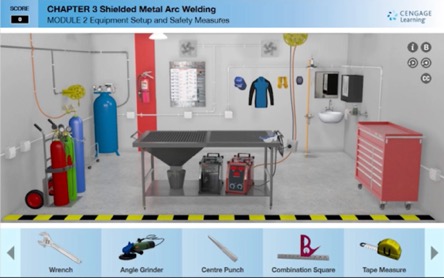
While many trades require students to get plenty of time completing skills in-person to build muscle memory and feel comfortable on the job, simulations can help prepare students for other aspects of job. For instance, welding students need to be in the shop to practice the weld, but simulations can offer practice in the pre-work like reading blueprints and setting up safe workspaces, as well as post-weld activities like analyzing welds for mistakes.

Welding
Welding Simulations Part II (Set up a safe workspace)

Troubleshooting Practice

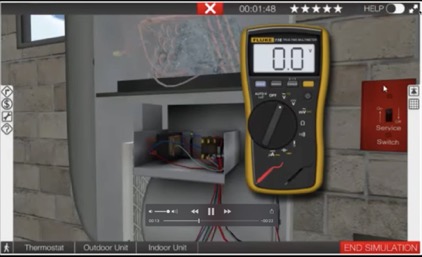
While some CTE programs may be lucky to have multiple computers in PC Repair programs or furnaces, air conditioners, or automobiles to work on in the lab or shop, most don’t have the chance to house all examples of equipment for students to practice all of troubleshooting scenarios they need for certification or to do the job. Simulations are able to give students practice with many more possible faults and scenarios in real-time.

Delmar
Delmar Online Training 3.0 (DOTS) HVAC Simulation

Professional Software Training

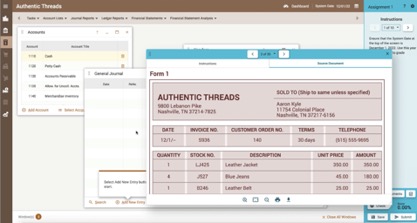
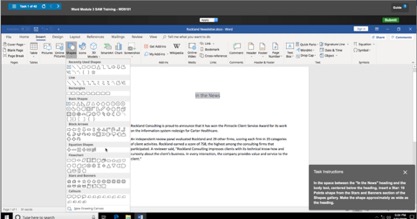
Many career pathways and potential jobs require that students are either certified in, or can use professional software to solve problems. Traditionally, step-by-step projects and screenshots can give students some practice using software, but with cloud versions of software many teachers find it difficult to keep up with new software updates and changes in the interface.

These kinds of assignments often take an extremely long time to grade or are difficult for teachers to see where students may have made mistakes throughout the assignment. Simulated experiences in professional software allow for student attempts at even multi-part assignments. Thus, making it easier for the teachers to be recorded or even offer a report that breaks down all the steps the student took within the assignment, making it easy for teachers to find where students went wrong and help them correct the skill.

Century21 Accounting
Century21 Accounting Simulation — Authentic Trends
Microsoft Office 2019
Microsoft Office 2019 Word Training Simulation

Simulations may be the most cost-effective way to provide students access the wide variety of experiences they need to be prepared for real-world situations. As simulation training and testing becomes even more prevalent in the professional space, using simulation training appropriately can also be a career skill we can focus on in high school. 

Click here to see available CTE Hands-on online simulations across the career clusters.

Facebook
Twitter
LinkedIn
building_blocks

3 Ways to Build Student Confidence to CTE Concentrator Status

3 Ways to Build Student Confidence to CTE Concentrator Status

Abigail Hess

Associate Product Marketing Manager • Career & Technical Education • National Geographic Learning | Cengage

There is plenty of data that proves students in CTE (Career and Technical Education) programs who make “Concentrator” status are more likely to graduate high school and enroll in secondary education or accept a job after graduation. “Concentrator Status” used to vary depending on your state, but is now defined by Perkins V as students who complete at least two CTE courses in a single career pathway. While 94% of all high school students are served by CTE, only 20% of high school students become CTE concentrators. And while it’s expected that two-thirds of all new jobs will require some kind of credential in addition to a high school degree, most certifications and credentials students can earn in high school require skills that will be learned in 2 or more courses within a career pathway.

So how can we encourage MORE students to take the second, third, and even fourth course in a high school career pathway so that they are prepared for an industry credential?

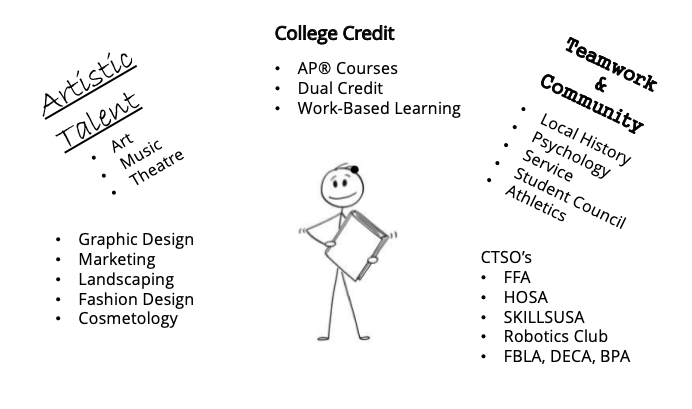
Market how CTE courses offer the same creativity, practicality, and social benefits of other electives offered at your school.

Ultimately, most CTE courses are electives. So students have to choose to take not one, but multiple courses in a career pathway to become a concentrator. And CTE courses often compete with other electives that may be creative, like Art, Theatre, and Music. They compete against courses that earn college credit or steer students toward secondary education like AP courses, as well as courses and organizations that engage with the community.

CTE Electives

But we know that a Career Pathways in Arts, Audio/Video Technology, and Communications, Marketing, Sales, and Service, or Business, Management, and Administration Career Clusters offer many opportunities for Art and Music students to thrive. Likewise, dual-credit courses with local institutions often found in Business, Management, and Administration pathways or work-based learning programs for Technical Trades and Health Science pathways offer experience and sometimes credit for students who know they are college-bound. And CTSO organizations in all clusters offer the same social benefits and chances for community involvement that students seek in other “fun” electives and clubs. Think about advertising CTE pathways offered at your district in earlier courses or with advisors for student organizations in middle school and even elementary that relate to your career pathway.

Require that students begin a portfolio from their very first CTE experience.

Portfolios of student work are often Capstone requirements once a student gets to the end of their career pathway, but incorporating a portfolio from the very first CTE experience catalogs tangible examples of career-related skills students are learning in every CTE course.

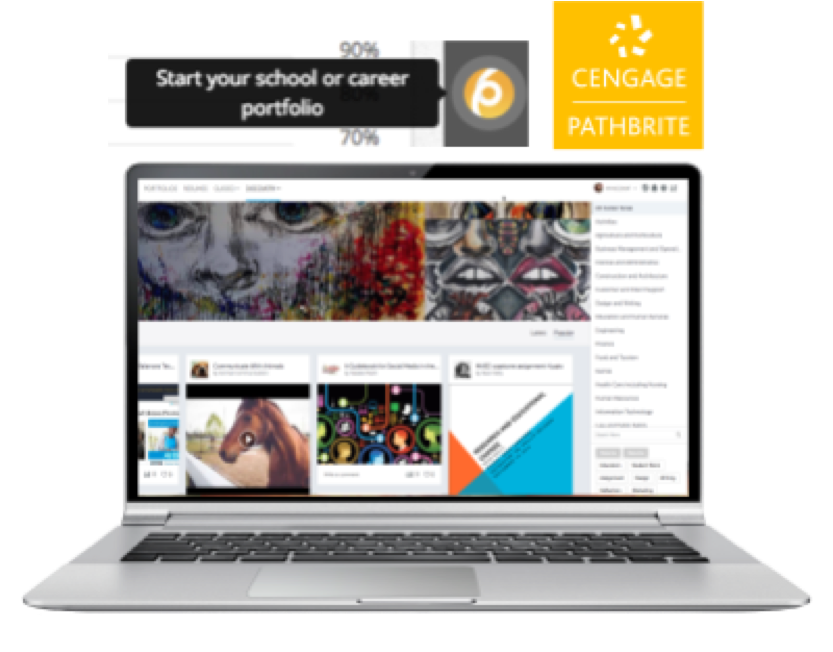
Ask your students to create an empty folder in their portfolio, one for each core skill they will learn throughout the Career Pathway. As they see their folders fill up, they will be encouraged that they can continue until their portfolio is complete. Sharing student examples in higher-level courses in the career pathway—videos or images of work—can make students excited about what they can achieve in related classes they can take in the future.

At National Geographic Learning, a part of Cengage, all MindTap courses provide access to Pathbrite, the online portfolio tool that students can keep throughout their high school experience and beyond. Students organize video, images, project files, and earned credentials by industry skill, and can share these visual portfolios with their peers, teachers, and even future employers.

Offer stackable certifications that can be obtained from the first CTE course.

Most industry-backed certifications cannot be taken until the very end of their career pathway or even post-high school. When they are offered in high school, teachers don’t usually get much information on how their students did and where they made mistakes. Like AP courses, many students may work all year or several years for one shot at passing certification, with content they may have learned a year or two before.

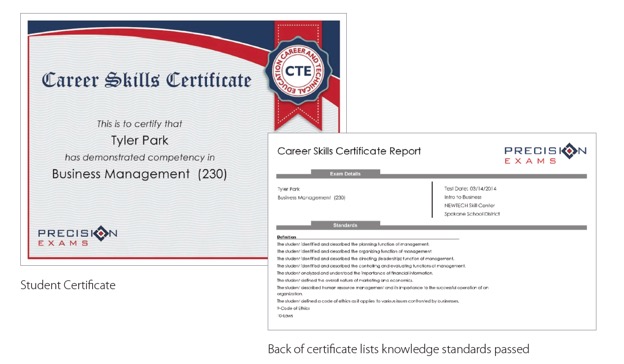
Offering stackable certifications with a pre and post-test for every single course in your career pathway provides test-taking experience throughout the program, and gives students confidence that with each course they are learning skills that they will need to get a job. National Geographic Learning, a part of Cengage partners with Precision Exams to offer course-level industry-backed certifications across the 16 Career Clusters. With over 180 certifications, teachers can offer pre and post exams for every course and receive robust, standards-level reporting that makes it easy to see where the class and individual students need more practice. All knowledge standards are written in conjunction with national and local industry and are updated every 2-3 years to ensure direct contact with the skills that students need for today’s careers.

Students also receive a printable certificate when they pass their post exams, that are backed by partner organizations and include the passed knowledge standards on the back, making it easy to add the certification and proven skills in a portfolio and resume. 

Students will take more CTE courses in their high school career if they can: 

  1. See how they already relate to their strengths, interests and experiences they’ve had in elementary and middle school
  2. Get excited about future courses in a career pathway by building a portfolio that shows how far they have to go.
  3. Feel confident about capstone-level and post-secondary certifications by earning industry-backed credentials at the course level

We know that CTE courses prepare students for career, the key is to give students the resources to prove their knowledge and experience to future employers and institutions, no matter where their next step is in their Career Journey.

Facebook
Twitter
LinkedIn
contemporary-gradient-handrails-perspective-434645

Why Upgrade to Microsoft Office 2019?

Why Upgrade to Microsoft Office 2019?

Abigail Hess

Associate Product Marketing Manager • Career & Technical Education • National Geographic Learning | Cengage

We know that Microsoft has committed to continue to new versions of Microsoft Software every 3-years in addition to Office 365 updates. And while updating means working with your administration and IT to upgrade the new software AND  your learn new features, there are several reasons why Office 2019 is worth it and offers new tools that will better prepare students for success in competition, college, and their future careers.

Stay up to date with Microsoft Office Specialist Certification (MOS)

Microsoft recently released their Office 2019 Associate level exams for Word, Excel, PowerPoint and Access, and just released Word Expert in August of 2019. Excel Expert releases in September 2019, and Access in November, 2019 (Certiport). MOS certification has becoming increasingly popular as an industry credential for any CTE student, even beyond the Business, Finance, and Marketing career clusters. With Office 365, most businesses with Microsoft Office subscriptions will update to Office 2019 within the year and employers will be looking for certifications that match the software they use.

Appropriate Icon Use

Word, Excel, PowerPoint, and Outlook now allow users to insert Scalable Vector Graphics (SVG). So what’s cool about them?

With over 500 SVG icons that users can change the color, re-size, and rotate these characters add visual interest and provides teachers with the change to have students put their emoji obsession to good use. Teach the difference between personal and business communication and appropriate icon use in Outlook messages and invites, in Word Business Documents, and PowerPoint presentations. When does a visual icon enhance communication and add clarity or distract? When is it appropriate or not?

More Powerful Presentations

PowerPoint for Office 2019 allows users to quickly add clean motion animations and move seamlessly around your presentation, with Morph transition and Zoom.

Morph transition saves time and confusion from traditional animation methods by allowing users to duplicate a slide, make any changes and then add a transition that actively allows presentation views to see the change, whether options move, grow, or shrink.

Zoom allows the presenter flexibility by reconstructing the organization of the traditionally, linear PowerPoint presentation. Students can now practice giving presentations that are conversational and allow presenters to move to new ideas in their presentation in a realistic manner, without having to click through 20+ slides to get to the topic at hand.

Enhanced Excel

Excel for Office 2019 has many updates, but a few that students will be excited about may be the ability to create a new map chart to show values or categories in particular sections of a country or the world—an awesome tool for lessons in economics and global business.

PivotTable improvements speed up data analysis without forcing users to wait for the table to load until they have selected all the changes they want, and even can save defaults to get the same outcome much quicker next time! Likewise, Automatic Relationship Detection helps find relationships across multiple tables and notifies students if they should be linked together to find the information they need.

For additional information check out these posts by one of our authors of the Shelly Cashman Series for Microsoft Office, Corinne Hoisington!

Facebook
Twitter
LinkedIn
Koeninger_Morehouse

Using Academic Testing to Create a Culture that Motivates Students

Using Academic Testing to Create a Culture that Motivates Students

Dr. Jim Koeninger discusses the HOSA Academic Testing Center. He is joined by Bergen Morehouse, Director of the HOSA Competitive Events serving nearly 10,000 competitors at the annual conference and advising the 54 state, territory and country associations.

Jim Koeninger, Ph.D

Executive Director
HOSA

Bergen Morehouse

Director
HOSA Competitive Events

Dr. Jim Koeninger discusses the HOSA Academic Testing Center. He is joined by Bergen Morehouse, Director of the HOSA Competitive Events serving nearly 10,000 competitors at the annual conference and advising the 54 state, territory and country associations.

National Geographic Learning and HOSA-Future Health Professionals partnered in 2019 to provide delegates attending the HOSA 2019 International Leadership Conference (ILC) the opportunity to test their basic knowledge to become a future health professional. The top 10 scorers were recognized at an ILC Awards Session. This recognition opportunity motivates future health professionals to determine their college readiness in critical academic subjects. Dr. Koeninger believes that two to three times as many HOSA members will participate in the Academic Testing Center in 2020.

Sign up for this replay to: