
Corinne_Hoisington-March

Microsoft Teams and Engagement Tools for Online Teaching – VIDEO

Microsoft Teams and Engagement Tools for Online Teaching – VIDEO

Communicating with students and parents has changed drastically as schools across the country have been forced to teach online for the first time this spring, but author Corinne Hoisington sees this as an opportunity to make use of the many free digital tools we have today to engage students in learning even when they can’t be in the classroom.

Communicating with students and parents has changed drastically as schools across the country have been forced to teach online for the first time this spring, but author Corinne Hoisington sees this as an opportunity to make use of the many free digital tools we have today to engage students in learning even when they can’t be in the classroom.

Watch author and Computer Science Professor/Teacher Corinne Hoisington walk through some amazing tips and free online tools to start teaching online.

sencer-b-yilmaz-xoo_zVzSJq4-unsplash

Microsoft Teams and Engagement Tools for Online Teaching with Corinne Hoisington

Microsoft Teams and Engagement Tools for Online Teaching with Corinne Hoisington

Abigail Hess

Associate Product Marketing Manager • Career and Technical Education • National Geographic Learning | Cengage

*Access the recording of Corinne Hoisington’s webinar here. 

Communicating with students and parents has changed drastically as schools across the country have been forced to teach online for the first time this spring, but author Corinne Hoisington sees this as an opportunity to make use of the many free digital tools we have today to engage students in learning even when they can’t be in the classroom.

WATCH author and Computer Science Professor/Teacher Corinne Hoisington walk through some amazing tips and free online tools to start teaching online. Feel free to pause the video and try out these tools as Corinne introduces them. A full list of the tools she mentions are available below in the order they are introduced in the webinar.

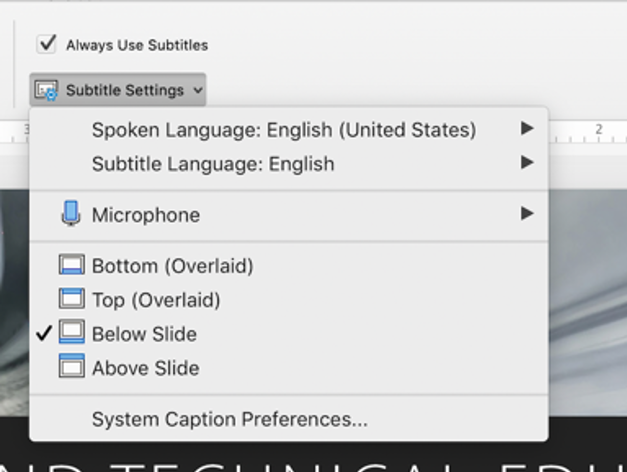
Add Closed Captioning to your Virtual Presentations with Microsoft PowerPoint 365

  1. Open Slideshow Tab
  2. Check “Always present with subtitles” 
  3. Under “Subtitle Settings” select which language(se) you want to present with
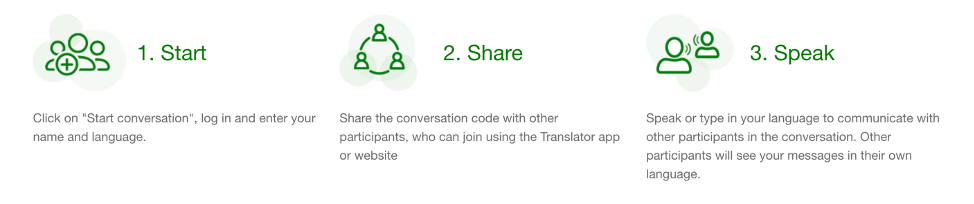
Microsoft Translate.it

*Free online tool

Allows you to create a personal link that allows a parent or student to login and pick whatever language they prefer.
Google Lens Mobile App

*Free downloadable app

Use your camera to search for what you see in the world. Download at App store  “Google Lens” or on an iPhone, “Google App” on the Apple Store.

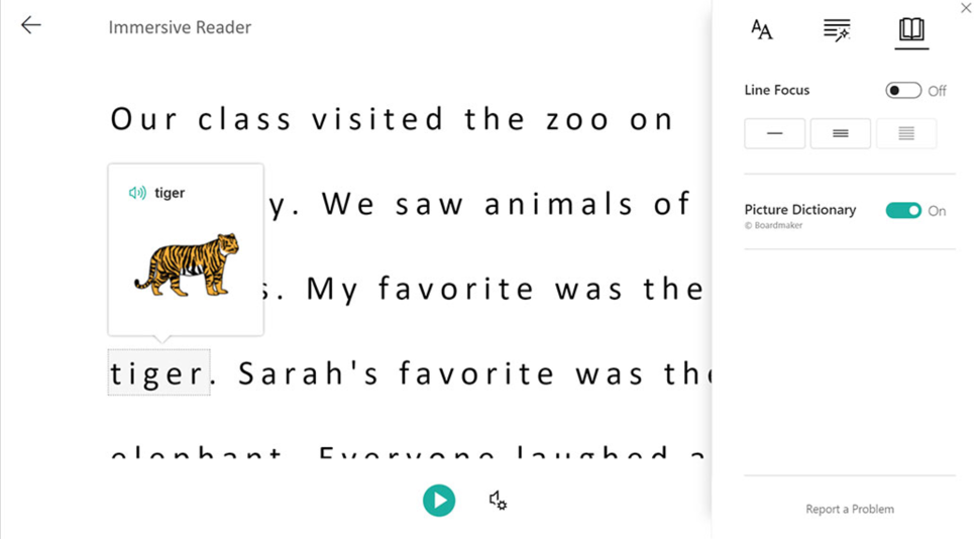
Microsoft Immersive Reader

*Free tool inside Microsoft Edge Browser, Microsoft Word for Office 365 and much more.

Make it easier for students to understand online assignments, readings, and articles with a tool that decodes and reformats text to help emerging readers.
Microsoft Teams for Education

*Free online tool and included in Office 365 Subscriptions

  • • Can be used on any platform, including smart phones AND can be integrated into your everyday classrooms even if you are a Google School
    • Many parents may already be familiar with Microsoft Teams as it is often used in the business world
Why Microsoft Teams?
  • • Teach online for free and record your lesson plan
    • Work with your colleagues on projects
    • Share lessons across your school systems
    • 250 students can be live at the same time on video
    • Share content/files with students
    • Share your desktop or pass control for a student to share
    • Whiteboard available 
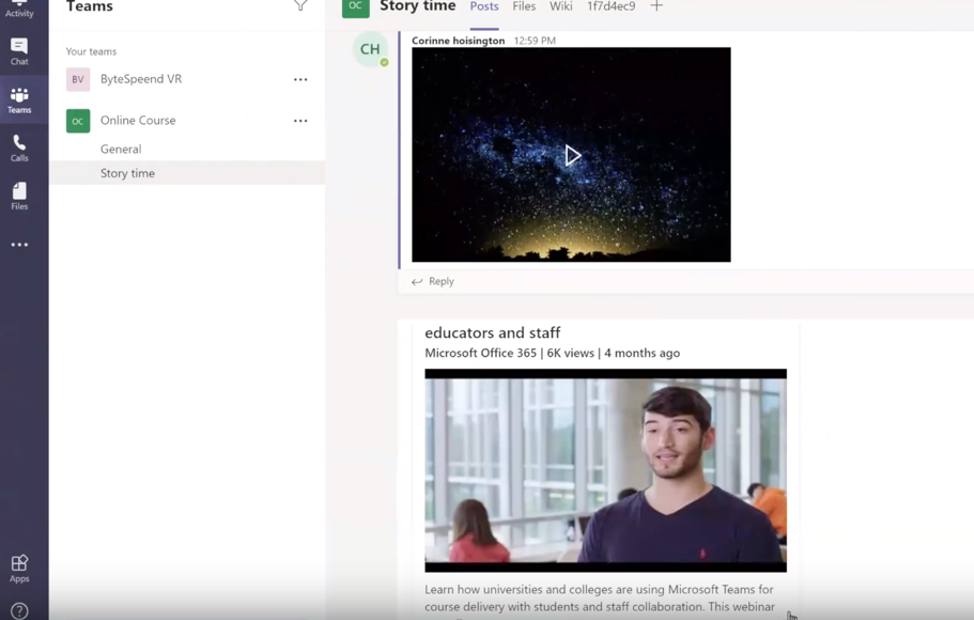
Flipgrid

*Free online tool

• Easy way to allow students to share short videos to contribute to classroom discussions and share projects
• Offers moderated features where teachers can give an OK for when the rest of your students see other videos uploaded by students
• Includes the ability to use an avatar rather than a video for students who cannot share video

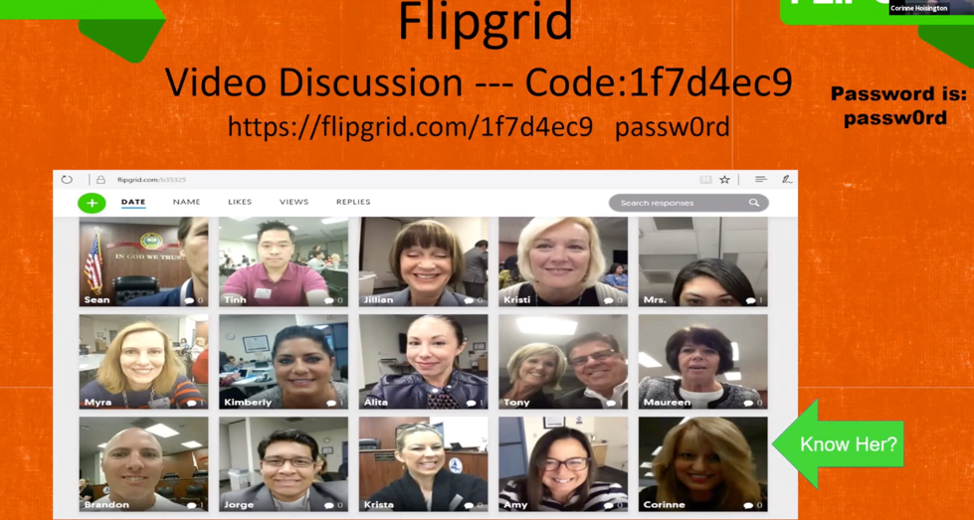
Introduct yourself and share a favorite technology you are using on Corinne Hoisington’s Flipgrid for online learning! 

  1. Go here: https://flipgrid.com/1f7d4ec9
  2. Enter the password: passw0rd (the o is a zero)
*Access the recording of Corinne Hoisington’s webinar here.

Corinne Hoisington is a full-time professor of Information Systems Technology at Central Virginia Community College in Lynchburg, Virginia, with more than 25 years of teaching experience. Corinne travels over 200,000 miles a year delivering keynote addresses to college and university professors and K-12 educators in over 70 cities worldwide for customers such as the Microsoft Corporation, Microsoft Canada Camp 21 International Events, Cengage Learning, ByteSpeed, Capital One International Bank, Executive LIVE in London and Johannesburg, and the international South by Southwest (SXSW) event in Austin, Texas. Professor Hoisington is the recipient of the Microsoft Most Valuable Professional award in Computer Programming. Corinne has authored over 30 textbooks with National Geographic Learning, a part of Cengage on topics such as Outlook 2019, Office 2019, Microsoft Windows, Android Boot Camp Java, Technology Now, and Visual Basic 2017.

Corinne is a thought leader and curriculum specialist for Virtual Reality. Corinne believes that VR & AR are game-changers in education today. The pedagogies of constructivism and immersive learning show that students learn best by doing or by being. So they shouldn’t just read about history — they should ‘be’ historians. They shouldn’t just study archaeology — they should ‘be’ archaeologists. Let’s raise the next round of inventors through the discovery of a 3D world.

Technology infused pedagogy has the power to transform teaching & learning.  We can now create deeper and authentic learning using digital resources such as virtual reality and artificial intelligence that are now available to both teachers and students. It’s never been a more exciting time for teachers to explore and for schools to stay connected with accessible and current technology to nurture student engagement and success.


Resources and help for those affected by COVID-19

We’re monitoring the spread and impact of Coronavirus (COVID-19) on K-12 schools across the country. If you’ve been affected by Coronavirus and are experiencing a school closure, we’ve collected resources for educators that may help.
Corinne_Hoisington-March

Microsoft Teams and Engagement Tools for Online Teaching

Microsoft Teams and Engagement Tools for Online Teaching

Communicating with students and parents has changed drastically as schools across the country have been forced to teach online for the first time this spring, but author Corinne Hoisington sees this as an opportunity to make use of the many free digital tools we have today to engage students in learning even when they can’t be in the classroom.

Corinne Hoisington

Professor of Information Systems Technology
Central Virginia Community College, Lynchburg, Virginia

Yes, I'm over the age of 16. I want to receive important National Geographic Learning | Cengage updates and information. *

Communicating with students and parents has changed drastically as schools across the country have been forced to teach online for the first time this spring, but author Corinne Hoisington sees this as an opportunity to make use of the many free digital tools we have today to engage students in learning even when they can’t be in the classroom.

Watch author and Computer Science Professor/Teacher Corinne Hoisington walk through some amazing tips and free online tools to start teaching online.

Joan_Shin

Teaching Grammar to Young Learners Can Be Fun!

Teaching Grammar to Young Learners Can Be Fun!

In this webinar replay, Dr. Shin will share ideas for teachers to engage young learners of English in grammar activities that are embedded in meaningful and real-world contexts. Join Dr. Shin and find out how fun learning grammar can be through songs, stories, and games that are just right for your young learners!


Dr. Joan Kang Shin

Associate Professor of Education

In this webinar replay, Dr. Shin will share ideas for teachers to engage young learners of English in grammar activities that are embedded in meaningful and real-world contexts. Join Dr. Shin and find out how fun learning grammar can be through songs, stories, and games that are just right for your young learners!

In this webinar replay, you will learn:

Paul_Battaglia

Keep it Real, Keep it Relevant — Exciting opportunities to keep students engaged in mathematics

Keep it Real, Keep it Relevant — Exciting opportunities to keep students engaged in mathematics

Opportunities to enrich student learning are everywhere! Teachers should feel empowered to use real-life, relevant materials and experiences to show students in grades 6-12 where mathematics exists daily.

Paul shares some of his favorite examples, shows how to find innovative resources that go beyond the four walls of a classroom, and demonstrates how to apply them on a daily basis.

Paul Battaglia

Math Teacher, consultant, and author of
AP® Calculus, Calculus, Precalculus, Algebra 2, Statistics

Opportunities to enrich student learning are everywhere! Teachers should feel empowered to use real-life, relevant materials and experiences to show students in grades 6-12 where mathematics exists daily.

Paul shares some of his favorite examples, shows how to find innovative resources that go beyond the four walls of a classroom, and demonstrates how to apply them on a daily basis. This will result in students who look forward to learning mathematics concepts and teachers who will feel invigorated during the instructional process.

In this webinar replay, you will learn:

jeremy-bishop-h7bQ8VEZtws-unsplash

Explorers in the Classroom – Keep students engaged and learning from home

Explorers in the Classroom – Keep students engaged and learning from home

Mark Hoffman

Senior Product Marketing Manager • K-12 Science/Disciplinary Literacy • National Geographic Learning | Cengage

A 5th grade teacher friend told me about how she is trying to keep her students engaged as they continue their learning from home. “There’s a limit to the number of math worksheets you can give them,” she explained. “Have them read anything, the back of the cereal box, just as long as they’re reading!” She was hitting on the problem of keeping her students engaged from a distance, but also wanting real-world and authentic experiences that she can no longer provide in person.

One way to overcome this challenge is with live streaming videos of real National Geographic Explorers, scientists, engineers, and conservationists right at home. This is exactly what teacher Joe Grabowski started doing in his own classroom several years ago. His methods and results were so successful, he was selected to become a National Geographic Explorer in 2017 and soon after became National Geographic’s first Education Fellow.

So how can your students benefit from what National Geographic and Joe have started? Two ways, actually.

National Geographic Explorer Classroom

Explorer Classroom connects classrooms around the world with National Geographic Explorers, bringing science, exploration, and conservation to life through live video events. Students have the opportunity to ask the explorer their questions directly. Each month Explorer Classroom features a new theme and provides supporting resources for educators. Throughout the school year, classes can also join explorers live on expedition through their In the Field series.

To help students stuck at home, starting March 23, Explorer Classroom is launching a daily broadcast at 2pm Eastern time. This is in addition to other scheduled events throughout the day/week. They have also set up Family Guides for parents to help students learn more about the Explorers and the topics they study including pre- and post-session activities and questions.

Every talk is recorded, so if you can’t attend live to ask questions in person, you can view over 100 past talks with Explorers any time on National Geographic Education’s YouTube page.

Exploring By The Seat of Your Pants

Exploring By The Seat of Your Pants is the nonprofit set up by Explorer and teacher Joe Grabowski with dozens of live events each month streaming Science, Exploration, Adventure, and Conservation into classrooms across North America. Joe and his team host guest speakers and take students on virtual field trips with leading experts from around the world using special transmitters to broadcast live into classrooms and homes from the most remote regions on the planet. Since September 2015, they have run well over 1,000 live events connecting hundreds of thousands of students to scientists and Explorers in over 70 countries.

Their news series starting this month, Coronavirus Can’t Stop the Virtual Classroom, was created specifically for students and parents at home.

These talks are recorded as well and you can view hundreds of them on-demand at the Exploring By the Seat of Your Pants YouTube page.

Resources and help for those affected by COVID-19

We’re monitoring the spread and impact of Coronavirus (COVID-19) on K-12 schools across the country. If you’ve been affected by Coronavirus and are experiencing a school closure, we’ve collected resources for educators that may help.
brett-jordan-zMJYmwca-_k-unsplash

A Distance Learning Lesson On—Paper Towels?

A Distance Learning Lesson On—Paper Towels?

Andrea Kingman

Executive Product Marketing Manager • Social Sciences, Humanities, Health Science • National Geographic Learning | Cengage

As I looked out my home office window, I noticed a piece of paper towel gently billowing along the deck on a breezy, sunny March afternoon—left over from grilling outdoors the night before.  I sat up straighter—paper towel? I immediately went outside and grabbed it.  I knew I’d use it for something.  It had been outside, but I couldn’t see it going to waste.  Paper towel—gone from all the shelves in my community grocery stores, gone from the normal online ordering channels, and almost gone from my own pantry. Perhaps I could use the one piece of paper towel for cleaning or dusting.  I immediately retrieved it from the deck and set it aside.

Is there an opportunity now, in this time of an unprecedented pandemic, to create a lesson about sustainability? Is there a teachable moment to focus on developing a conscience so we are more aware of how and what we consume, usually without a moment’s hesitation?  Commodities like paper towels are taken for granted in U.S. households, in schools, restaurants, and grocery stores.  Americans use close to 13 billion pounds of paper towels each year or 80 rolls per person per year—most of which ends up in a landfill.  Once in our landfills, our serious methane, waste and pollution problems continue to grow.  (The Environmental Impact of Paper Towels, durafreshcloth.com/881-2/; Copyright c GLOBECOMAINE 2015 [email protected]; March 20, 2020)

For a distance learning lesson, why not challenge students to create a personal story.  When do they usually reach for a piece of paper towel? What could be used instead that is easily be found in the house? And on an annualized basis, how many trees might be saved?  How many trees might be saved by the time they graduate from high school? Have students think of other metrics to present.  What are other ways students can reduce use of paper or plastic?

Suggest that each student develop his or her own sustainability story and include songs, photos, or even poetry.  Ask students to create a short video, if possible, documenting their case study.  Set up a panel of judges and different categories—or even extra credit activities.  Online research sources are plentiful—and students will feel in control in a time of such uncertainly.  Their ideas or stories may even be submitted to their local newspaper.  A seemingly small contribution on how to conserve our planet’s resources starts within their family and could extend to their community. This small inquiry lesson could be fun, engaging, and rewarding.

If you are a high school teacher, the lesson above could be turned into an economics lesson on supply and demand.  Ask students to identify a commodity that is in short supply—and high demand–and turn this into a simply supply and demand research project.  Paper towels, hand sanitizers, and even spring water are good examples.  Do prices change in relationship to supply and demand? As the daughter of an economist, this was one of the lessons I learned about economics.  Now is the perfect time to illustrate how the concept of supply and demand plays out in unusual times.

Students and families are adjusting to new ways of living and new routines. Encourage your students to experience the satisfaction of being at the center of a lesson—and at the center of their own learning. 

Resources and help for those affected by COVID-19

We’re monitoring the spread and impact of Coronavirus (COVID-19) on K-12 schools across the country. If you’ve been affected by Coronavirus and are experiencing a school closure, we’ve collected resources for educators that may help.
tom-gainor--vDWZgVsE5s-unsplash

5 CTSO Tips for Business, Marketing and Finance Advisors

5 CTSO Tips for Business, Marketing and Finance Advisors

Abigail Hess

Associate Product Marketing Manager • Career and Technical Education • National Geographic Learning | Cengage

*Learn more about DECA competitions, my experience and why business professionals should volunteer their time as CTSO judges in the first post of this series and tips for role-play student competitors in the second post of this series.

Enliven Role Play Prep — Apply the Butterfly Effect or try and SNL Production Week

The traditional role play gives students a short period of time to read a new scenario, come up with a solution, present, act-out their role and gain valuable interview skills by answering questions on the fly. A lot happens very quickly and there isn’t much time to reflect on what could have been done differently. Try mixing up role play with either of these strategies:

  • • Butterfly Effect—small changes can lead to really BIG changes down the line. Try taking some role play scenarios you’ve used in the past and ask the class to find pieces of information they could change out for something else. Did the scenario say you are to create a marketing plan for a Boutique Hotel? What if it was for an international chain instead? Was the company you were supposed to be working for a chain of discount hair salons like SuperCuts? What if it was an online startup for pet art like Crown & Paw? Work as a group to reimagine old scenarios and list out all of the decisions you may now need to rethink throughout the role play.
  • • Saturday Night Live Today—Writers and actors for SNL write multiple sketches and create an entire show each week with their infamous production schedule. Instead of using a pre-written business scenario for a role play, ask the students to write and perform their role-play for the class at the end of the week.
    • • On Monday, they will split into small groups for a pitch meeting. This will include research, discussion, and time to designate roles for the rest of the week.
    • • Tuesday is script-writing day. Lockdown the chosen scenario and describe the perfect cast to solve the problem. Ask them to add in some twists and turns—or deal-breakers—that the judge character might introduce. This will ask students to anticipate what kinds of questions a judge might ask.
    • • Wednesday is the round table meeting. Bring all groups into a class discussion and give time for each group to pitch their role-play scenario and their solution. This is time for other groups to give feedback and brainstorm as a team what kind of visuals, data points, or ideas might make their role play even stronger.
    • • Thursday is the day to develop the role play. Students break back into their small groups to practice and create any visuals that might be effective in their interviews/presentations.
    • • Friday is showtime! Bring in popcorn or snacks and have each group perform their role-play for the class.

Download Daily Worksheets for the SNL Today activity here.

For Assessment-based Competition, Turn the Test Into a Game Show

Some students love taking tests, but it’s not always the most fun part of a CTSO. Practice tests are great, but can get dull and lose some of that real-world application that makes business courses exciting. You can find dynamic and free PowerPoint templates that help you turn quizzes into Jeopardy or Family Feud games. Many teachers also love using apps like Kahoot! to put smartphones to good use. Putting students into teams and testing their knowledge in real-time can help heighten the stakes of practice tests. Even if students are planning on competing in different testing areas, they can practice test-taking, memory, and teamwork skills needed on competition day.

Build CTSO Prep Into the Weekly Curriculum

It might seem like a lot to have to take into account state standards, 21st Century Skills, AND CTSO competition Performance Indicators/Competencies into your course. You’ve already got so much to cover and little time to do it. However, some curriculum is already aligned to CTSO competition needs and many of the projects you already love to assign and know students engage with probably do, too. Whether your school is part of FBLA, DECA, BPA or another CTSO, take time once a year to look at the skills required for a few of the competitions you know students have signed up for in the past and tie them to what you already plan to do in class. That way every project students work on can act as advertising for your CTSO and let them know they are already proving they have the skills they need to be successful in competition.

Make CTSO Prep Activities Part of the Student Portfolio

Your career pathway or course may already require that students create a portfolio at the end of the year, but encouraging students to collect and reflect on their work throughout the year reinforces that the work they do today will pay off tomorrow. Whether your students practice by taking practice assessments, doing research, role-plays, presentations, or even discussion, living the age of smartphones makes it easy to turn these activities into artifacts that prove learned skills. Students can make videos or take photographs as they practice and add them to a growing portfolio that documents learning and offers a way for students to look back at all they have achieved leading up to the competition. This experience also makes it easier for students to write or talk about their CTSO experiences in a future cover letter or interview.

Change-up Who Plays the Judge

Whether students are practicing for role-playing, test-based, interview, or project-based style competitions, taking feedback from different people and roles within their education and career journey may bring about ideas that would have otherwise never come about! If you can, inviting other teachers, principals, students from other classes, and even parents or industry professionals into the classroom to play judge for student work can again increase the stakes before the competition and will only benefit your CTSO public image.

Advisors!

Looking for more information on DECA competitions and practice assignments to prepare students for success? Request a sample of the forthcoming fifth edition of Burrow’s MARKETING, which is aligned to DECA Performance Indicators and includes DECA competition information with the Winning Edge feature, offering DECA Event-Prep Projects in every chapter.

The Samples You Want Without The Wait!

Request samples for your classrooms without the hassle. Our new SampleNow site gives you access to hundreds of samples in minutes.
Fred_Kleiner

Teaching the History of Art and Architecture with Google Earth

Teaching the History of Art and Architecture with Google Earth

Instructors today have a wealth of technology at their fingertips, presenting new ways to introduce students to art and architecture exploration in real time. Students have the opportunity to view a wide variety of art from many cultures, influenced by geography, history, religion, and social and political climate.

Fred Kleiner, Ph.D.

Professor of History of Art & Architecture,
Professor of Archaeology,
Boston University

Instructors today have a wealth of technology at their fingertips, presenting new ways to introduce students to art and architecture exploration in real time. Students have the opportunity to view a wide variety of art from many cultures, influenced by geography, history, religion, and social and political climate.

In this presentation, Professor Kleiner will describe how bringing Google Earth/Google Maps software into all of his courses has transformed his classroom into an exciting and memorable learning experience for students at all levels. The presentation will also take the form of a how-to tutorial.

In this webinar replay, you will learn:

joseph-barrientos-xcC5ozHk_N8-unsplash

3 Tips for Role Play Student Competitors from a Volunteer DECA Judge

3 Tips for Role Play Student Competitors from a Volunteer DECA Judge

Abigail Hess

Associate Product Marketing Manager • Career and Technical Education • National Geographic Learning | Cengage

*Learn more about DECA competitions and my experience and why business professionals should volunteer their time as CTSO judges in the first post of this series.

Know your audience

Even though you may only have a short time to read through your role play scenario, you should immediately write down who YOU are in the scenario and who the JUDGE is. In many cases, the Judge is cast as a high-level position at a company. They might be a CEO, VP, CFO, or a Director. You will most likely be at a lower level than the Judge, either an employee or a vendor hoping to work with the Judge’s company. Keep in mind the Judge’s role when pitching new ideas or strategies. You may make mistakes that can affect your 21st Century Skills or Overall Impression scores:

  • • Insulting the company’s previous strategies directly insults company leadership.
    • • Don’t: Describe your idea as an obvious move from outdated or dull practices.
    • • Do: Pitch your idea as a new venture that enhances or creates new opportunities for the company.
  • • Defining business/marketing/finance terms without applying them to the scenario undermines the Judge’s role.
    • • Don’t: Begin or end a presentation by providing textbook definitions of key terms. A CEO, VP, or Director doesn’t need a business lesson. They want your expertise to convince them your plan will help their business.
    • • Do: Make sure to cover all of the talking points listed on your scenario sheet as they relate to the scenario.

Example: 

The scenario requires the student to describe the purpose of SWOT Analysis.

Don’t just say:

“And now, I would like to define SWOT analysis. SWOT analysis is used to help a company make business decisions by identifying strengths, weaknesses, opportunities, and threats.”

Apply your knowledge to the scenario instead:

“We can use SWOT analysis to prove that the decision to rebrand your hotel chain is the best decision for your company to increase clientele. Let me show you how.”

Leave time to organize your notes in chronological order.

There are many methods for successful and efficient note taking, if you are studying for a test. But in a role-play competition, you have little time to build out a presentation that you will have to deliver in person. As most students leave their notes on the table as they present, I’ve noticed that students with clean, step-by-step notes, end up with higher scores. Why?

  • • Clean notes make it easier to maintain eye contact.
    • • When your notes are scattered across the page, connected by arrows and exclamation points, your eye has to search for your reminders to make sure you are hitting all of your key points, instead of connecting with the Judge.
    • • It’s easy to tell when you are at the end of your presentation, and quickly wrap up with a conclusion.
  • • You are more likely to hit all of the key topics in the scenario.
    • • Even if you are a great speaker, make eye contact, use appropriate hand gestures, and have a firm, but comfortable handshake, MOST of your score still comes from including the topics outlined in the scenario.
    • • If your notes are in an outline, it’s much more difficult to skip, miss, or forget a great point you want to include.
  • • This outline can be repurposed as a visual agenda.
    • • Judges are tasked with listening for key words that indicate you have addressed the main topics on their rubric for each scenario. Showing the Judge your outline provides a visual that quickly helps them check off necessary talking points and focus on your speaking skills and creativity instead.
    • • Starting with a quick agenda verifies that you understand the purpose of the presentation and will ultimately satisfy their questions.

Example:

The scenario requires the student to:

  • • Discuss varying types of promotions in the hotel and restaurant management industry.
  • • Discuss the similarities and differences between a hotel chain and boutique hotel.
  • • Explain the risks and benefits of rebranding. 
  • • Suggest a marketing strategy for attracting current customers to a hotel chain that has rebranded to compete with boutique hotels.
  1. Introduction.
    • • Greeting
    • • Goal of meeting
    • • Agenda
  2. Promotional Strategies in the Hotel and Restaurant Management Industry
    • • Connect to the scenario (describing several promotional options, but ultimately settling on one or two for this scenario)
    • • Describe your chosen strategy in more detail.
    • • Include a research point why this is the right strategy (if time, draw a quick chart or graph that emphasizes your point.)
  3. Similarities and Differences between Hotel Chains and Boutique Hotels.
    • • Connect to the scenario (introduce traits of boutique hotels by describing an imaginary competitor and describe traits of hotel chains by describing your company’s chain.)
    • • Point out the attributes of the competitor that you want to include, enhance, or consider for your hotel chain.
    • • Include a research point why this is the right strategy (if time, draw a quick chart or graph that emphasizes your point.)
  4. The Risks and Benefits of Rebranding.
    • • Connect to the scenario (describe possible risks of rebranding your hotel chain and end with the benefits you expect to see.)
    • • Make sure to show how the benefits outweigh the risks in this case.
    • • Include a research point why this is the right strategy (if time, draw a quick chart or graph that emphasizes your point.)
  5. Marketing Strategy.
    • • Connect to the scenario (describe your innovative marketing strategy for your hotel chain)
    • • Make sure to explain why your strategy will work in this case.
    • • Include a research point why this is the right strategy (if time, draw a quick chart or graph that emphasizes your point.)
  6. Conclusion.

If there is time, use your scratch paper to create visuals that are valuable to your presentation.

Adding visuals to any presentation will help the Judge visualize your ideas, and is a great way to get additional points for creativity. Don’t worry, no one is judging your artistic talent, however, creating visuals just for the sake of having a visual or document that doesn’t add to your presentation may seem like a failure to manage your time.

  • • Do: consider drawing a graph, chart, sample or prototype to show the thought behind your decisions.
    • • Graphs should quickly show that your “research” backs your ideas.
    • • Make sure that if you are displaying survey results, sales, or units, that the growth you want to show is easy to see.
  • • Do: consider drawing a sample of any ads, web pages, or apps that you may have ideas for. It’s hard to describe how something will look or work in such a short time. Drawing it out allows the judge to visualize your ideas immediately!
  • • Don’t: Many students spend time making fake “business cards” to hand to the judge at the end of the presentation.
    • • Only do this if it makes sense in the scenario. (If the judge is your direct manager, they have your contact info.)
    • • Don’t do this if it takes up time for something more important, like polishing a graph or organizing your notes.

Advisors!

Looking for more information on DECA competitions and practice assignments to prepare students for success? Request a sample of the forthcoming fifth edition of Burrow’s MARKETING, which is aligned to DECA Performance Indicators and includes DECA competition information with the Winning Edge feature, offering DECA Event-Prep Projects in every chapter.

The Samples You Want Without The Wait!

Request samples for your classrooms without the hassle. Our new SampleNow site gives you access to hundreds of samples in minutes.